Only parks with a continuous reservation history of at least five years will be considered; no new viewing parks will be added to the reservation system.
The Municipal Corporation of Delhi (MCD) has relaxed its previous blanket ban on hosting socio-religious events in its “ornamental parks,” allowing parks that have hosted such events for five consecutive years or more to be considered for future use. This policy adjustment comes ahead of the festive season, a time when these parks are typically used for staging Ramayana plays and other related events. Concerns had previously been raised that such activities could damage greenery and property.
However, the revised policy approved on September 29 did not open up all ornamental parks for reservation. Consequently, Clause 2(iii) of the resolution dated July 16, 2013, stipulated: “No new ornamental parks shall be reserved; however, if any ornamental park has been reserved continuously for at least five years (subject to submission of proof of reservation), its re-reservation is permitted.” A subsequent circular issued on August 22, 2013, also amended this provision.
Prior to this, relevant regulations permitted long-term religious activities in parks but prohibited the reservation of ornamental parks.
An official stated that the amendment would maintain the restriction against adding new ornamental parks to the reservation system while allowing existing ornamental parks with a verifiable five-year reservation history to be considered for religious activities.
Jawahar Park Incident Prompts Policy Change
The amendment specifically cites the case of Jawahar Park in Model Town’s Block D, a site that had been booked by a religious drama committee for Ramlila performances since 2006. The park was subsequently developed into an ornamental park, prompting the committee to seek permission from the Municipal Corporation of Delhi (MCD).
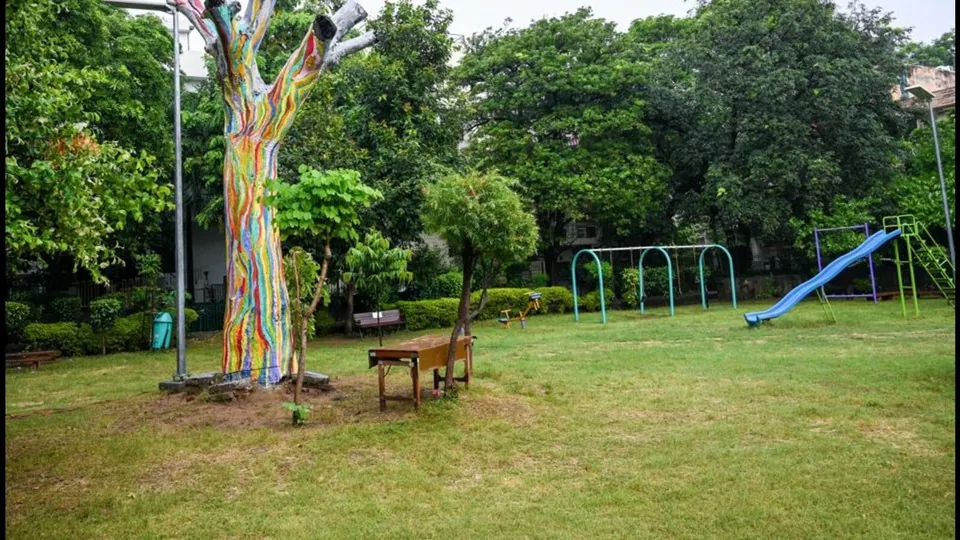
Under MCD regulations, ornamental parks are defined as green spaces designated and landscaped by the Horticulture Department, primarily intended to enhance aesthetic appeal and provide areas for leisure activities such as walking. The MCD manages over 15,000 parks covering a total area exceeding 5,000 acres; of these, 5,945 are classified as ornamental parks.
Officials stated that the proposed relaxation does not imply that all ornamental parks will automatically be opened up for hosting events. “The five-year tenure and the requirement for documentary proof remain central to the proposed amendment. Existing mandates regarding permissions and the protection of park infrastructure also remain in force,” the official added.
The National Green Tribunal and the Supreme Court have restricted activities in parks.
Controversy regarding the use of Delhi’s parks for religious and social events has a long history. In February 2021, the National Green Tribunal (NGT) ordered a complete ban on holding weddings, social gatherings, and commercial events in Delhi’s public parks and open spaces, holding municipal bodies—such as the Municipal Corporation of Delhi (MCD) and the Delhi Development Authority—accountable. This followed petitions filed by Residents’ Welfare Associations (RWAs) highlighting severe environmental degradation and damage to greenery.
In August 2021, the Supreme Court stayed the blanket ban but ruled that parks could host events only if they strictly adhered to guidelines previously established in the case of M.C. Mehta v. Union of India (2009). The Court limited the use of parks for such events to a maximum of 10 days per month.
The National Green Tribunal (NGT) reiterated these restrictions in an order issued on July 27 this year. “We direct that any application for the allotment of park land for religious purposes must be considered in accordance with the law, with reference to the circular dated August 22, 2013, and the Supreme Court’s judgment in the M.C. Mehta case.”
Legal Opinion Leads to ‘Five-Year Exception’
Officials stated that, following the NGT ruling, the matter concerning Jawahar Park was referred to the legal counsel of the Municipal Corporation of Delhi (MCD). Legal opinion identified a conflict between the existing Clauses 2(i) and 2(iii): the former acknowledges parks where religious activities have been held continuously for five years, whereas the latter explicitly prohibits the use of ornamental parks for such purposes. Consequently, the Horticulture Department has proposed amending the clause to introduce an exception for cases meeting the five-year criterion.
“This creates a practical issue for long-standing Ramlila events: a park might have hosted religious activities for years, yet because it is classified as an ornamental park, it might not be eligible for booking,” the official added.
Residents’ Associations Seek to Protect Green Spaces
Atul Goyal, President of the United Residents Joint Action (URJA) in Delhi, stated that most ornamental parks are “meticulously” maintained by local communities, and efforts must be made to ensure the greenery is not destroyed. “A balance must be struck among all stakeholders. There are many undeveloped park sites, some of which are currently used as parking lots; these should be prioritized for such events. Ideally, ornamental parks should remain undisturbed, but if permission is granted, local community members must be involved in the relevant committees and oversight mechanisms to ensure plants are not damaged and no litter is left behind. Signage outlining the organizers’ responsibilities should be erected so that compliance can be monitored,” he added.